Maslow’s Contributions to Humanistic Psychology
Soon after Maslow began his career, he grew frustrated with the two dominant forces of psychology at the time, Freudian psychoanalysis and behavioral psychology (Koznjak, 2017).
Maslow believed that psychoanalysis focused too much on “the sick half of psychology” (Koznjak, 2017, p. 261). Likewise, he believed that behaviorism did not focus enough on how humans differ from the animals studied in behaviorism. He thus contributed to the third force of psychology that arose in response to this frustration: humanistic psychology.
Humanistic psychology gained influence in the mid-20th century for its focus on individuals’ innate drive to self-actualize, express oneself, and achieve their full potential.
Such foci represented a significant shift from the pathologizing and behaviorist approaches of the past, and Abraham Maslow’s work is widely considered having been at the center of this movement.
At the core of the humanistic psychology movement was the idea from gestalt psychology that human beings are more than just the sum of their parts and that spiritual aspiration is a fundamental part of one’s psyche.
Maslow himself was known to have been a big believer in this view; he was widely known for his optimism throughout his research. Further, his works were some of the first to deviate from psychology’s dominant focus on pathology and instead explore what it takes for humans to reach their full potential.
A key reason why Maslow’s work triggered a movement is owed to the way he positioned the role of human unconsciousness. Like Freud, a proponent of the dominant psychoanalytic approach at the time, Maslow acknowledged the presence of the human unconscious (Maslow, 1970).
However, whereas Freud argued that much of who we are as people is inaccessible to us, Maslow argued people are acutely aware of their own motivations and drives in an ongoing pursuit of self-understanding and self-acceptance. These ideas were ultimately reflected in his seminal works on self-actualization and his hierarchy of human needs (Maslow, 1970).
Maslow’s Hierarchy of Needs
In 1943, Maslow published the epoch-making article of his career, A Theory of Human Motivation, which appeared in the journal, Motivation and Personality (DeCarvalho, 1991). In the paper, Maslow argued that “the fundamental desires of human beings are similar despite the multitude of conscious desires” (Zalenski & Raspa, 2006, p. 1121).
According to the theory, humans possess higher- and lower-order needs, which are arranged in a hierarchy.
These needs are:
- Physiological needs;
- Safety;
- Belongingness and love;
- Esteem; and
- Self-actualization (Maslow, 1943).
In his article, Maslow (1943) describes these needs as being arranged in a hierarchy of prepotency.
In other words, the first level of needs are the most important and will monopolize consciousness until they are addressed. Once one level of needs is taken care of, the mind moves on to the next level, and so on, until self-actualization is reached.
Levels of Maslow’s Hierarchy
Let’s inspect each of the levels in Maslow’s hierarchy.
At the bottom of the hierarchy are physiological needs, which are considered universal. Among the physiological needs are air, water, food, sleep, health, clothes, and shelter. These needs’ positioned at the bottom of the pyramid signifies they are fundamental to human wellbeing and will always take priority over other needs.
Next in the hierarchy are safety needs. If a person does not feel safe in their environment, they are unlikely to guide attention toward trying to meet higher-order needs. In particular, safety needs include personal and emotional security (e.g., safety from abuse), financial security, and wellbeing.
Third in the hierarchy is the need for love and belonging through family connections, friendship, and intimacy.
Humans are wired for connection, meaning that we seek acceptance and support from others, either one-on-one or in groups, such as clubs, professional organizations, or online communities. In the absence of these connections, we fall susceptible to states of ill-being, such as clinical depression (Teo, 2013).
The fourth level of the hierarchy is esteem needs. According to Maslow, there are two subtypes of esteem. The first is esteem reflected in others’ perceptions of us. That is, esteem in the form of prestige, status, recognition, attention, appreciation, or admiration (Maslow, 1943).
The second form of esteem is rooted in a desire for confidence, strength, independence, and the ability to achieve. Further, Maslow notes that when our esteem needs are thwarted, feelings of inferiority, weakness, or helplessness are likely to arise (Maslow, 1943).
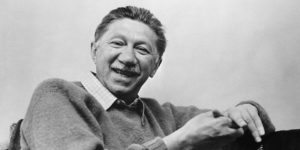 Abraham Maslow was one of the most influential psychologists of the twentieth century.






What our readers think
He was not russian-Jewish. His parents were from Ukraine. Kyiv, to be exact.
You precisely explained and your work flows very well. Thank you so much for adding insight into Humanistic psychology. Remain blessed and sharing articles